

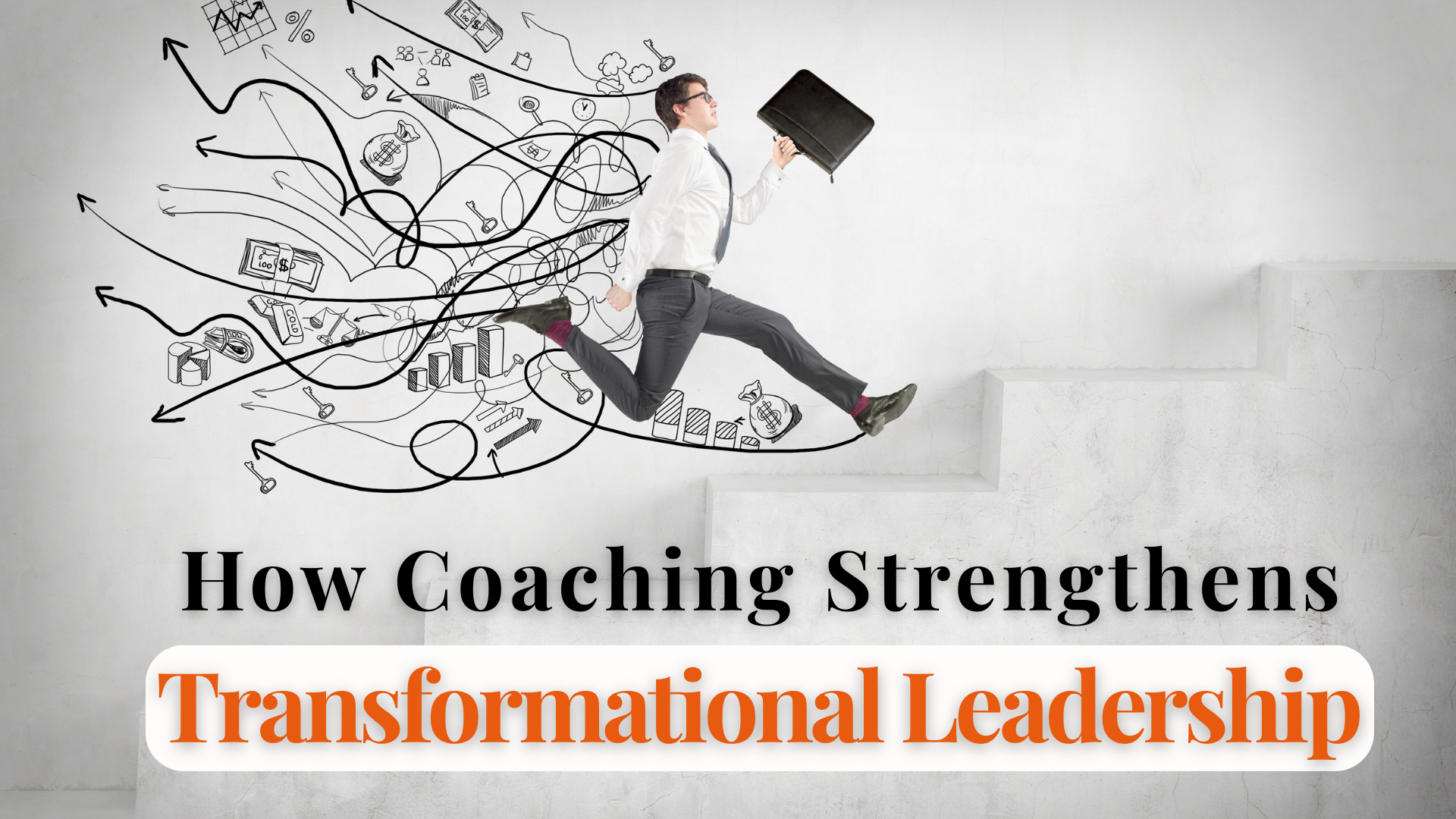
How Coaching Strengthens Transformational Leadership

Walk into any modern workplace and you’ll notice a shift. Teams don’t just want instructions—they want meaning, direction, and a reason to give their best. Managers who once thrived by supervising tasks now find that management skills alone are not enough. What organizations demand today is leadership that moves people, not just processes.
Through coaching managers to lead, organizations are unlocking new levels of performance. They’re investing in group leadership skills, manager readiness programs, and above all, in empowering mid-level managers to rise as true leaders.
Because when a manager evolves into a leader, something powerful happens:
- Teams feel seen and motivated.
- Cultures shift from compliance to commitment.
- Organizations grow with resilience and clarity.
Why today’s organizations demand more than management skills
Picture this: a manager checking tasks off a list, chasing deadlines, and ensuring compliance. Now, imagine a leader who paints a vision so clear that people want to move toward it, not because they’re told to—but because they feel inspired.
That’s the difference today’s organizations are hungry for. The business landscape no longer rewards supervisors who rely only on authority. It rewards leaders who can connect, influence, and energize.
👉 Organizations that invest in coaching don’t just see better reports—they experience stronger executive coaching outcomes, like higher engagement, resilient teams, and leaders who inspire loyalty.
The shift from supervision to transformational leadership
Transformational leaders don’t stop at tasks—they touch people’s identities. They awaken confidence in mid-level managers, turning them into role models others naturally want to follow. When companies commit to coaching managers to lead, they are preparing them not only to manage today but to shape tomorrow.
This is why manager readiness programs are so critical. They don’t simply teach processes—they build mindsets. They equip managers with the courage to challenge the status quo, the ability to inspire teams during uncertainty, and the clarity to define a vision worth pursuing.
The Power of Leadership Style Coaching
Leadership style coaching focuses on this “how,” guiding managers and executives to understand the impact of their behaviors, words, and decisions. For many, it’s the missing piece between being a manager who organizes tasks and a leader who inspires people.
One of the first breakthroughs in leadership style coaching is helping leaders recognize old habits that no longer serve them. Some leaders cling to outdated methods like strict supervision or micromanagement, which may deliver short-term results but damage long-term trust. Through coaching, these patterns are identified, challenged, and reshaped into approaches that build collaboration and motivation.
Core development points leaders address in coaching:
- Replacing command-and-control habits with trust-building communication
- Shifting from reactive problem-solving to proactive vision-setting
- Learning how tone, body language, and listening shape team dynamics
When leaders understand that their style is not just about them but about how others experience them, they begin to unlock new levels of influence and authenticity.
How Coaching Helps Leaders Break Old Patterns
It’s easy for managers to fall into routines: leading the same way they were once managed, avoiding feedback, or prioritizing tasks over people. Leadership style coaching interrupts these cycles. By holding up a mirror, coaching creates space for leaders to see where their patterns are holding them back.
For example, a leader who relies heavily on authority may realize their team feels stifled and disengaged. With coaching, they learn to shift from control to empowerment, giving their team ownership and accountability.
| “Lead with influence, not just authority. Our coaching equips you with the mindset and skills to inspire, engage, and guide teams with confidence.” |
Why Leadership Style Defines How Teams Experience Growth
Teams don’t just grow because strategies are strong; they grow because leadership gives them the environment to thrive. A leader’s style determines whether people feel motivated, trusted, and willing to innovate. Leadership style coaching ensures that leaders are conscious of the tone they set.
Consider two scenarios:
- A manager with a rigid, transactional style may achieve compliance but rarely sees innovation.
- A leader with a flexible, empowering style creates psychological safety where team members feel free to share ideas and take risks.
The difference comes down to leadership style. Coaching helps leaders align their intentions with their impact, ensuring their teams not only meet goals but also develop new skills and confidence along the way.
Transformational Leadership in Action
When people talk about great leaders, they’re rarely describing supervisors who just assign tasks. They offer the perspective of leaders who stoke progress, passion, and purpose. This is the essence of transformational leadership.
Through real examples, we see how transformational leaders:
- Motivate teams not with fear but with purpose
- Focus on long-term impact rather than short-term wins
- Establish a culture that makes people feel capable and appreciated.
When coaching supports this transition, leaders stop managing tasks and start shaping futures. They learn to connect with their teams at a deeper level, aligning personal motivations with organizational goals.
Stories of Growth, Change, and Renewed Purpose in Teams
The proof of transformational leadership is always in the stories teams tell. In organizations where coaching has guided leaders to transform their style, the results are visible in the people. Employees describe renewed purpose, higher engagement, and stronger loyalty.
For instance, a mid-level manager who once struggled with rigid control may, after coaching, learn to listen actively and delegate more effectively. The outcome? Team members feel trusted, contribute more ideas, and find new meaning in their roles.
These stories highlight that leadership is not just about driving productivity. It’s about creating an environment where people grow alongside results. And that’s what transformational leadership truly delivers — growth for both the leader and the team.
Performance, retention, and cultural shifts leaders create
The ultimate test of coaching is its ripple effect. Leaders who invest in coaching often see:
- Higher team performance and productivity
- Reduced turnover through stronger employee engagement
- A cultural shift toward openness, trust, and innovation
Such outcomes show that coaching not only transforms the leader but also strengthens the entire organization.
Improving Leadership Identity Through Coaching
Leadership isn’t just about external skills — it’s about how leaders see themselves. Coaching plays a central role in improving leadership identity, helping leaders align their self-image with their role and responsibilities.
How leaders begin to see themselves differently
Through reflective conversations, leaders recognize both strengths and blind spots. This process reshapes their identity by:
- Highlighting the qualities that make them authentic
- Helping them break away from outdated patterns
- Encouraging them to lead with confidence instead of self-doubt
As leaders refine their identity, their presence becomes stronger and more credible.
Identity as the foundation of influence and authenticity
A leader’s identity influences every decision and interaction. Improving leadership identity ensures that authenticity and consistency guide leadership behavior. Leaders that live up with their principles naturally motivate teams without imposing their will.
Authentic identity is the cornerstone of influence. Without it, leadership feels forced; with it, influence flows effortlessly.
Personalized Coaching: No Two Leaders Grow the Same Way
Every leader brings unique challenges, strengths, and contexts. That’s why personalized coaching is essential. Unlike generic training, personalized coaching creates growth pathways designed for the individual.
Why personal context shapes every coaching journey
A leader navigating rapid growth faces different challenges than one rebuilding trust after a crisis. Personalized coaching adapts to each scenario, ensuring relevance and impact. It gives leaders practical tools that directly apply to their real-world situations.
Focusing growth on amplifying natural strengths
The capacity of individualized coaching to build on strengths and address flaws is what gives it its potency. Key benefits include:
- Building confidence in areas where leaders already excel
- Developing strategies for overcoming recurring obstacles
- Ensuring growth aligns with long-term leadership vision
When growth is personalized, leaders are more likely to adopt new practices and sustain them over time.
-
How leadership style coaching impacts executive coaching outcomes
Leadership style shapes daily interactions, and through coaching, it directly influences results. Leadership style coaching helps leaders refine their approach so that it translates into meaningful executive coaching outcomes.
By examining their style, leaders become aware of how tone, behavior, and communication affect others. Adjustments lead to outcomes such as:
- Stronger team engagement
- Faster resolution of conflicts
- Greater alignment with organizational strategy
Leadership style coaching creates leaders who are both adaptable and effective in achieving measurable results.
-
The ripple effect on teams, organizations, and long-term vision
The true value of coaching shows in its ripple effect. When leaders shift their style, teams notice the change. As a result, a culture of accountability, respect, and unity is fostered. Over time, these changes strengthen the entire organization and reinforce long-term strategy.
Transformational Leadership as the End Goal
The ultimate purpose of coaching is to build leaders who do more than manage — they transform. Transformational leadership is about inspiring others, driving change, and creating lasting impact.
Where improving leadership identity and personalized coaching converge
When improving leadership identity aligns with personalized coaching, leaders experience deep change. They gain clarity on who they are, how they want to lead, and how to bring their authentic self into every decision.
This convergence makes transformational leadership possible because leaders move beyond surface-level adjustments and embody meaningful change.
How True Leaders Step Forward to Inspire Progress
Transformational leadership shows up when leaders inspire through example. They:
- Spark commitment by living their values
- Guide teams through change with vision and clarity
- Empower others to lead with confidence
Through coaching, leaders move from managing tasks to shaping futures. That is what leadership development really aims to achieve.
| “Are you prepared to go beyond task management to motivate others?
Start your journey with leadership training that transforms skills into authentic influence.” |
Frequently Asked Questions
1. What are the main executive coaching outcomes leaders can expect?
Executive coaching outcomes often include improved decision-making, stronger communication, better team alignment, and measurable business results. Leaders also notice cultural improvements, such as higher engagement and reduced turnover.
2. How does leadership style coaching affect team performance?
Leadership style coaching helps leaders understand how their behavior and communication impact others. By refining their style, leaders create stronger trust, reduce conflict, and build a more motivated, high-performing team.
3. Why is improving leadership identity important for leaders?
Improving leadership identity ensures leaders act with authenticity and confidence. When leaders understand and embody their values, they naturally inspire credibility and strengthen their influence across teams and organizations.
4. How does personalized coaching differ from traditional leadership training?
Unlike generic programs, personalized coaching adapts to each leader’s unique challenges and strengths. It focuses on real-world context, helping leaders address specific goals while building on their natural leadership style.
5. What makes transformational leadership the ultimate goal of coaching?
Transformational leadership empowers leaders to move beyond task management. Coaching helps them inspire growth, drive meaningful change, and create a lasting culture of trust and innovation within their organizations.